
Hands-On Review: 44MP Compact Digital Camera with 16X Zoom for Kids and Teens
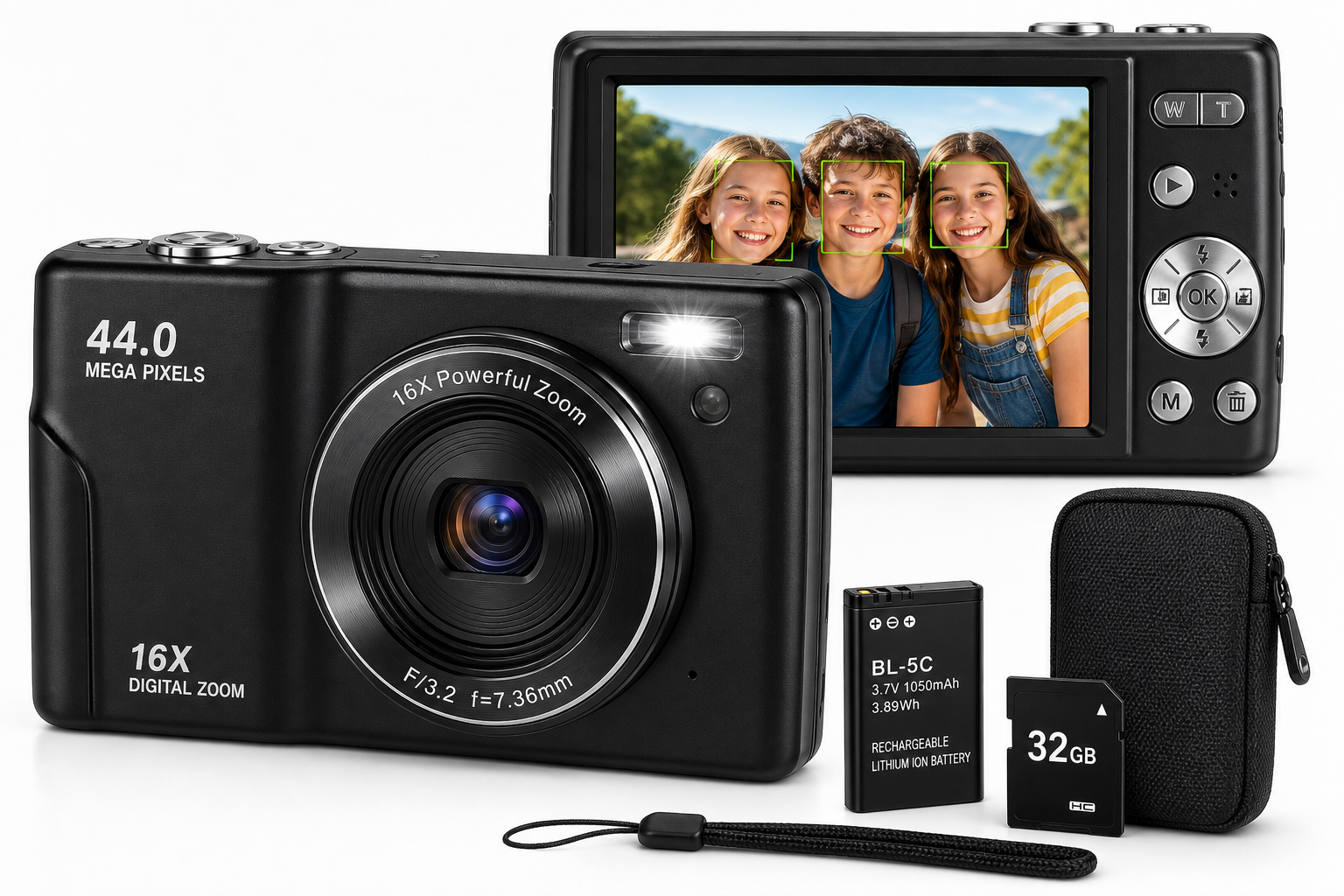
This review looks at the **[Digital Camera, 44MP Compact Camera, FHD 1080P Point and Shoot Digital Cameras with 16X Zoom, Face Detect, Smile Capture, Anti Shake, for Boys Girls Teens Gifts (Black)](https://www.amazon.com/dp/B0D9GVNVW2)** as an entry-level, compact option aimed at kids, teens, and casual users. It covers how the 44MP sensor, 1080P video, 16X digital zoom, face detection, smile capture, and anti-shake functions perform in everyday use, including travel, school events, basic vlogging, and family photography. The article highlights where this camera performs well compared to using a smartphone alone, where it shows its limitations, and which users are most likely to benefit from its straightforward point‑and‑shoot design.
Introduction
The Digital Camera, 44MP Compact Camera, FHD 1080P Point and Shoot Digital Cameras with 16X Zoom, Face Detect, Smile Capture, Anti Shake, for Boys Girls Teens Gifts (Black) is designed as a simple, lightweight alternative to both smartphones and more complex interchangeable‑lens cameras. Its pitch is clear: offer young or beginner photographers a dedicated device that’s easy to carry, easy to use, and feature‑rich enough to make learning photography fun.
Key features include a 44‑megapixel still image resolution, Full HD 1080P video recording, 16X digital zoom, face detection, smile capture, and basic anti‑shake functionality. The body is compact and lightweight, with straightforward button layout and menu navigation that prioritizes ease of use over deep manual control.
This review focuses on how those specs translate into day‑to‑day performance for the intended audience—kids, teens, and casual shooters—rather than comparing it to enthusiast‑level cameras.
Typical Use Cases
Because of its size, feature set, and target audience, this compact camera naturally lends itself to a few common scenarios:
-
Everyday family photos and social sharing
Quick snapshots at home, in the backyard, at the park, or during holidays, with images later transferred to a computer or shared on social media. -
Travel and school trips
A dedicated camera students can take on day trips, vacations, or school excursions without tying up a smartphone or worrying as much about drops and battery drain on their main phone. -
Beginner photography practice for kids and teens
A first “real” camera to learn framing, zoom, and basic composition, without the complexity and cost of a DSLR or mirrorless system. -
Simple video clips and beginner vlogging
Recording short 1080P clips—talking to camera, travel diaries, or quick event coverage—where ease of use matters more than extensive video controls. -
Gift for boys, girls, and teens
A relatively low‑risk, easy‑to‑understand gift that feels more like a dedicated gadget than handing over an expensive smartphone.
Performance in Each Scenario
1. Everyday Family Photos and Social Sharing
Image quality:
For casual snapshots in good light, the 44MP resolution delivers pleasing detail suitable for on‑screen viewing and small prints. Colors tend to be vibrant and slightly boosted, which many casual users find appealing. Indoors or in lower light, the small sensor can introduce visible noise and softness, so the best results come from well‑lit scenes.
Autofocus and face detection:
Face detection helps keep people relatively sharp in the frame, especially in simple compositions. It’s not as fast or sophisticated as modern smartphones, but for still subjects and typical family poses it’s adequate.
Usability:
Dedicated physical buttons and a straightforward menu system make it approachable for younger users. The point‑and‑shoot nature means there’s minimal setup—turn it on, frame the shot, and press the shutter.
2. Travel and School Trips
Portability:
The compact, lightweight design fits easily into a small bag, backpack pocket, or even a jacket pocket. It’s less fragile and less valuable than a phone or premium camera, which makes it a practical option for kids on school outings.
16X digital zoom:
The 16X zoom is digital rather than optical, so it enlarges the image electronically. This is useful for framing distant subjects, but it does reduce visible detail and can introduce grain or softness, especially at the extreme end of the zoom range. Used moderately, it’s acceptable for snapshots.
Battery life (typical use):
For a day of moderate shooting—occasional photos and short clips—the battery is generally sufficient. Extended video use or heavy LCD usage will drain it more quickly, so encouraging kids to switch the camera off between shots is helpful.
3. Beginner Photography Practice for Kids and Teens
Learning tool:
This camera’s biggest strength for beginners is its simplicity. There’s no lens swapping and only basic settings to worry about, which encourages experimentation with framing, timing, and subject choice instead of technical menus.
Feedback loop:
The rear screen and playback features allow kids to immediately review shots, delete unwanted images, and try again. Over time, they can see how holding the camera steady, using available light, and choosing angles changes the results.
Safety and independence:
Because it’s a dedicated camera—not a phone—parents can give kids more independence to explore photography without also handing over a fully featured smartphone.
4. Simple Video Clips and Beginner Vlogging
1080P FHD recording:
The camera’s 1080P video is suitable for casual use, such as short vlogs, school projects, or video diaries. In daylight or well‑lit interiors, video looks reasonably sharp for an entry‑level compact.
Anti‑shake:
The anti‑shake function helps reduce minor hand movements, especially when walking slowly or panning. It doesn’t replace the level of stabilization found in action cameras or higher‑end models, so footage can still appear shaky if the user moves quickly, but it’s a helpful assist for beginners.
Audio:
Built‑in microphones are basic and best for quiet environments or speaking relatively close to the camera. For serious vlogging or professional content, an external‑mic‑capable camera would be more appropriate, but for starter projects this is generally acceptable.
5. Gift Use Case: Boys, Girls, and Teens
Out‑of‑box experience:
Setup is simple: insert the battery and memory card, power on, and start shooting. The minimal learning curve makes it easy for kids and teens to get immediate use from the gift without needing extensive instruction.
Design and durability:
The compact, straightforward design is easy for smaller hands to hold. While it’s still an electronic device and should be treated with care, it generally withstands regular day‑to‑day handling better than a glass‑front smartphone.
Strengths Across Scenarios
-
Beginner‑friendly operation
The camera heavily emphasizes point‑and‑shoot simplicity. Automatic exposure, face detection, and smile capture allow young or inexperienced users to concentrate on framing rather than settings. -
Dedicated device for kids and teens
Since it’s not a smartphone, parents can encourage creativity and responsibility without opening the door to apps, messaging, or online distractions. -
Compact and lightweight
Portability is a major plus. It’s an easy everyday or travel companion and light enough that most kids will be comfortable carrying it. -
Fun features: face detect and smile capture
Face detection and smile capture add a playful element—especially appealing to younger users—by attempting to optimize shots with people and expressions. -
Reasonable stills and video in good light
In well‑lit situations, the 44MP stills and 1080P video are perfectly fine for casual use and social sharing, making it a practical upgrade from very basic toy cameras. -
Clear separation from phone usage
For parents who prefer not to rely on a child’s phone for photography, this compact camera offers a focused, single‑purpose tool.
Limitations Across Scenarios
-
Digital zoom instead of optical zoom
The 16X zoom is digital, meaning that image quality drops as you zoom in. At the high end of the zoom range, photos may appear noticeably softer or grainier, especially in low light. -
Low‑light performance
Like most small‑sensor compact cameras, performance in dim environments is limited. Expect more noise, slower focusing, and less detail when shooting indoors at night or in very low‑light scenes. -
Basic autofocus and tracking
While face detection helps, the autofocus system is not designed for fast action. Rapidly moving subjects—sports, running kids, pets—may result in more missed or soft shots compared to modern smartphones. -
Limited manual control and upgrade path
This camera does not cater to users who want to explore full manual exposure control or interchangeable lenses. Teens who develop a strong interest in photography will eventually outgrow it and look toward more advanced gear. -
Video stabilization and audio constraints
Anti‑shake assistance is basic, and there is typically no support for external microphones. For serious content creation or smooth, cinematic footage, a camera or smartphone with more advanced stabilization and audio options would be preferable. -
Screen visibility and outdoor usage
In very bright sunlight, LCD screens on entry‑level cameras can be harder to view clearly. Users may need to shade the screen with a hand or adjust angles to review images effectively outdoors.
Verdict
The Digital Camera, 44MP Compact Camera, FHD 1080P Point and Shoot Digital Cameras with 16X Zoom, Face Detect, Smile Capture, Anti Shake, for Boys Girls Teens Gifts (Black) is best viewed as a dedicated starter camera for kids, younger teens, and casual users who want something simple and separate from a smartphone.
In its comfort zone—daytime family photos, school events, vacations in good light, and basic video clips—it performs as intended: straightforward operation, fun features like smile capture and face detection, and enough resolution to produce colorful, shareable images. The compact form factor, low complexity, and clearly defined purpose make it a sensible gift for children interested in photography but not yet ready for more advanced gear.
Its limitations are typical for its class: digital rather than optical zoom, modest low‑light performance, and basic autofocus and stabilization. Enthusiasts or aspiring professionals will quickly bump into these boundaries.
If your primary goal is to give a child or teen an easy, self‑contained way to explore photography and record memories—without relying on a phone—the camera linked above offers a practical, beginner‑friendly option that aligns well with that use case.