
4K Digital Camera for Photography Autofocus Review: A Beginner-Friendly 4K Vlogging Companion
This review examines the **[4K Digital Camera for Photography Autofocus, Upgraded 64MP WiFi Vlog Camera](https://www.amazon.com/dp/B0DX1ZHF5T)**, a compact 4K/64MP point‑and‑shoot model aimed at beginners, teens, and casual vloggers. We break down its autofocus 4K video and 64MP stills, 3-inch 180° flip screen, 16x digital zoom, built-in WiFi, and included accessories (32GB card and two batteries). The article also covers real-world pros and cons, such as ease of use, travel-friendly design, feature set for YouTube content, and limitations versus more advanced mirrorless or DSLR cameras. You’ll learn who this camera is best suited for, who should look elsewhere, and how it fits into the broader landscape of entry-level vlogging and travel cameras.
What This Product Is
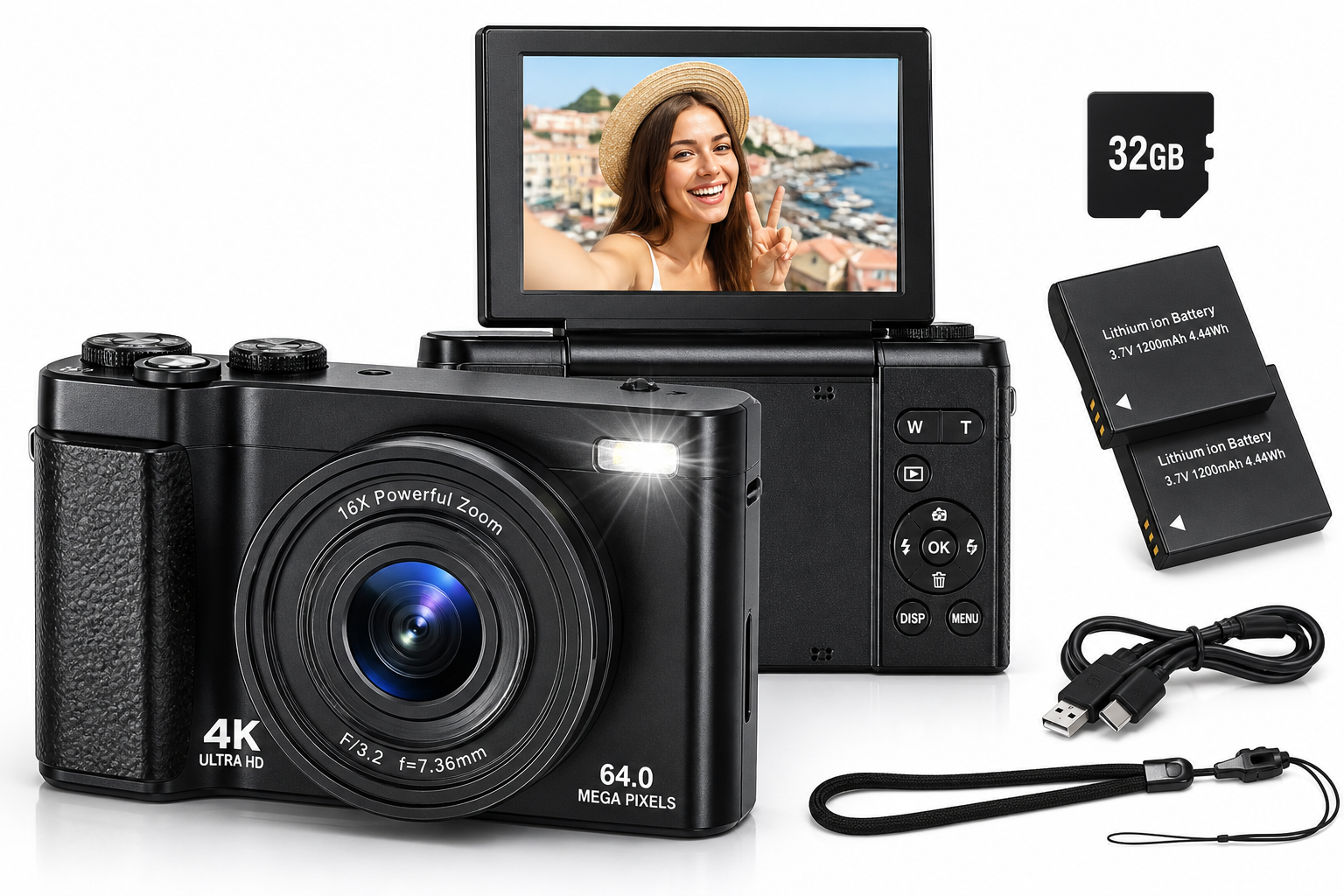
The 4K Digital Camera for Photography Autofocus, Upgraded 64MP WiFi Vlog Camera (often referenced under the TEFTYMON DC101 model name) is a compact, point‑and‑shoot style digital camera designed for beginners, casual photographers, and new content creators.
Key on-paper features include:
- 4K video recording and up to 64MP still images
- Autofocus for easier, sharper shots
- 3.0" IPS screen that flips 180° for selfies and vlogging
- 16x digital zoom
- Built‑in flash
- Built‑in WiFi for wireless transfer to a smartphone
- Support for use as a webcam for streaming or video calls
- Time‑lapse, slow motion, pause recording, and multiple scene/creative modes
- Included 32GB memory card, two rechargeable batteries, and straps for carrying
Overall, it’s an all‑in‑one starter bundle pitched as an everyday travel and YouTube camera rather than a professional interchangeable‑lens system.
Why It Matters
For many people starting out with video creation or photography, jumping straight into a mirrorless or DSLR setup can be intimidating in both cost and complexity. This camera aims to bridge the gap between a smartphone and a dedicated system camera by offering:
- A dedicated physical device for photos and videos so you’re not relying solely on your phone.
- A flip screen and autofocus, which are particularly important for solo vloggers who need to frame themselves and stay reasonably in focus.
- Travel‑friendly size and weight, making it easier to carry on trips, hikes, or school events.
- Beginner‑oriented controls and modes, so new users can get decent results without understanding exposure triangles or lens systems.
In short, it matters for anyone who wants a simple, inexpensive entry into dedicated camera ownership—especially for social media and YouTube—without the overhead of pro‑grade gear.
Key Advantages
1. Beginner‑Friendly Design
The camera’s straightforward button layout and menu system are geared toward first‑time users. Preset modes (portrait, night, landscape, etc.), face detection, smile capture, and a self‑timer help new photographers get usable shots with minimal configuration.
For vloggers, the 180° flip screen makes it easy to see framing, check exposure, and monitor recording status when you’re in front of the lens.
2. 4K Video and 64MP Still Resolution (On Paper)
This model advertises 4K video recording and up to 64MP photo resolution. While the actual image sensor is likely lower resolution and uses software upscaling for the highest megapixel count (a common practice in this category), the files still provide plenty of detail for social media, casual prints, and YouTube uploads.
For someone upgrading from very basic compact cameras or older phones, the jump in clarity—especially in good light—can be noticeable.
3. Autofocus and Face Detection
Having autofocus in a budget‑friendly camera is a major usability boost versus fully fixed‑focus devices. The camera can automatically adjust to keep subjects reasonably sharp, which is especially useful when you hand the camera to a family member or move around within the frame.
Combined with face detection and smile capture, it aims to reduce missed moments due to out‑of‑focus shots.
4. Flip Screen for Vlogging and Selfies
The 3‑inch IPS screen flips up 180°, a must‑have for vloggers. This lets you:
- Compose selfie shots or walking‑and‑talking vlogs
- Monitor whether you’re in frame
- Quickly adjust your angle while filming without needing an external monitor
For teenagers or anyone filming themselves without a camera operator, this is one of the best quality‑of‑life features on the device.
5. WiFi Connectivity for Quick Sharing
Built‑in WiFi allows the camera to connect to a smartphone, so you can transfer photos and videos wirelessly instead of removing the SD card. That’s handy for:
- Posting quickly to Instagram, TikTok, or YouTube Shorts
- Backing up images on a phone or tablet
- Sending clips to friends or family on the go
If you treat this as a dedicated capture device and your phone as the editing/sharing hub, the workflow is straightforward and approachable.
6. Included Accessories: 32GB Card and Two Batteries
Out of the box, you get a 32GB memory card and two rechargeable batteries. For a first‑time buyer, not needing to purchase these separately reduces friction and lets you start shooting immediately.
Two batteries are especially valuable for travel or long days of recording; you can keep one charging while using the other.
7. Multi‑Purpose Functionality
Beyond standard photo and video capture, the camera can act as a webcam when connected to a computer, useful for:
- Zoom or Teams calls
- Streaming on platforms like Twitch or YouTube Live
- Online classes and virtual meetings
It also offers creative modes such as time‑lapse, slow motion, pause recording, continuous shooting, and a variety of filters and effects. These are more about fun and experimentation than professional workflows, but they help keep beginners engaged.
Key Limitations
1. Not a Replacement for a Mirrorless or DSLR
Despite 4K/64MP claims, this is still a budget‑oriented compact camera. Compared with true mirrorless or DSLR systems, you can expect:
- Smaller sensor performance, especially in low light
- More visible noise and less dynamic range in challenging conditions
- Less sophisticated autofocus tracking for fast‑moving subjects
- No option to upgrade lenses for different looks or better light gathering
If you’re aiming for cinematic footage, serious photography, or professional client work, this camera will likely feel limiting.
2. 16x Digital Zoom, Not Optical
The zoom is digital rather than optical, which means image quality decreases as you magnify the frame.
Digital zoom essentially crops and enlarges part of the sensor’s image. It can be useful for framing distant subjects in a pinch, but you’ll see softness and artifacts compared with optical zoom lenses that physically change focal length.
3. Limited Low‑Light Performance
Cameras in this category typically perform best in good lighting—outdoors during the day or in well‑lit interiors. In low‑light or night scenes, you should expect:
- More image noise (grain)
- Reduced detail and color accuracy
- Greater reliance on the built‑in flash, which can produce harsher light
For casual use this may be acceptable, but if evening events, concerts, or indoor sports are your main subjects, you’ll quickly reach the camera’s limits.
4. Basic Stabilization
The camera relies on digital “anti‑shake” rather than advanced in‑body or lens‑based optical stabilization. This can help a bit with mild hand movement, but it won’t fully smooth out walking or running shots.
Vloggers who plan to walk and talk, film action scenes, or capture handheld B‑roll may still see jitter unless they add a tripod, monopod, or gimbal.
5. Entry‑Level Build and Ergonomics
The camera is light and compact, which is great for travel, but it also means:
- Mostly plastic construction
- Smaller grip area that may not be as comfortable for larger hands
- Buttons and dials that feel more budget‑grade compared with higher‑end cameras
These trade‑offs are expected at this level but are worth noting if durability and handling are top priorities.
Who It’s For
This camera is best suited to:
-
Beginners and Teens Exploring Photography or Vlogging
- Easy‑to‑learn controls and creative modes offer a forgiving first experience.
- The flip screen and autofocus remove much of the complexity of self‑filming.
-
Casual YouTube and Social Media Creators
- A step up from basic laptop webcams or older phone cameras, especially in good light.
- WiFi transfer makes it easy to get clips onto a phone for quick editing and uploading.
-
Travelers Who Want a Dedicated Camera Without Bulk
- Compact form factor fits easily into a small bag or jacket pocket.
- Two included batteries and SD card support all‑day sightseeing and casual travel vlogging.
-
Parents and Families Documenting Everyday Moments
- Simple operation allows anyone in the family to pick it up and shoot.
- Face detection, self‑timer, and continuous shooting help capture kids and group photos.
-
Users Needing a Simple Webcam Upgrade
- The ability to use it as a webcam gives better framing flexibility than many built‑in laptop cameras.
- Useful for remote work, online classes, or livestreams where you don’t want to invest in specialized webcam hardware.
Who Should Skip It
You may want to look at other options if you’re in one of the following groups:
-
Aspiring Professionals or Serious Enthusiasts
If you plan to pursue photography or video in a dedicated, skill‑building way, an entry‑level mirrorless or DSLR (even used) will provide:- Larger sensors with better image quality
- Interchangeable lenses
- More robust autofocus and manual controls
- Better upgrade paths over time
-
Low‑Light and Action Shooters
For concerts, indoor sports, night street photography, or fast‑moving subjects, you’re likely to outgrow this camera very quickly. A camera with a larger sensor, better high‑ISO performance, and more advanced autofocus is a better fit. -
Users Who Already Own a Recent High‑End Smartphone
Many modern smartphones offer impressive cameras with powerful computational photography, stabilization, and editing apps. If you already own such a phone, this compact camera may not deliver a dramatic quality leap—its value is more about having a dedicated, separate device and a flip screen than outright image superiority. -
Creators Demanding Strong Stabilization and Advanced Audio
If your content involves a lot of walking shots or you care deeply about audio quality (external mic support, advanced audio controls), you’ll want a more advanced camera or a system with microphone inputs and better stabilization.
Final Recommendation
The 4K Digital Camera for Photography Autofocus, Upgraded 64MP WiFi Vlog Camera is a practical, beginner‑oriented choice for users who want an inexpensive, dedicated camera for casual photography and entry‑level vlogging.
Its main strengths are:
- Flip screen and autofocus that simplify self‑filming
- WiFi connectivity for quick content transfer
- Included 32GB card and two batteries, making it a ready‑to‑use kit
- A compact, travel‑friendly design
At the same time, it’s important to understand its boundaries. Image quality and low‑light performance are tuned for everyday use rather than professional production, the zoom is digital rather than optical, and stabilization is basic. Enthusiasts who plan to grow their skills significantly, or creators chasing cinematic footage, will likely want a more capable system camera.
If your goal is to start capturing memories, experiment with YouTube, or give a young beginner a first real camera, this model offers a balanced mix of features, convenience, and ease of use. Treated as a stepping stone into the world of photography and video, it can be a solid first step—so long as your expectations are aligned with its entry‑level nature.