
Apple 2026 MacBook Air 13-inch with M5 Chip: A Forward-Looking AI-Ready Ultraportable
The [Apple 2026 MacBook Air 13-inch Laptop with M5 chip](https://www.amazon.com/dp/B0GR1JTFP8) brings Apple’s next-generation M5 silicon and AI-focused capabilities to the iconic Air design. With a 13.6-inch Liquid Retina display, 16GB unified memory, and a 512GB SSD, it aims to balance ultra-portable mobility with enough power for productivity, creative workflows, and emerging AI-driven applications. Wi‑Fi 7 support, a 12MP Center Stage camera, and Touch ID further modernize the experience. This review looks closely at its performance potential, display quality, connectivity, and day-to-day usability to help you decide whether this AI-ready MacBook Air configuration is the right fit.
Quick Summary
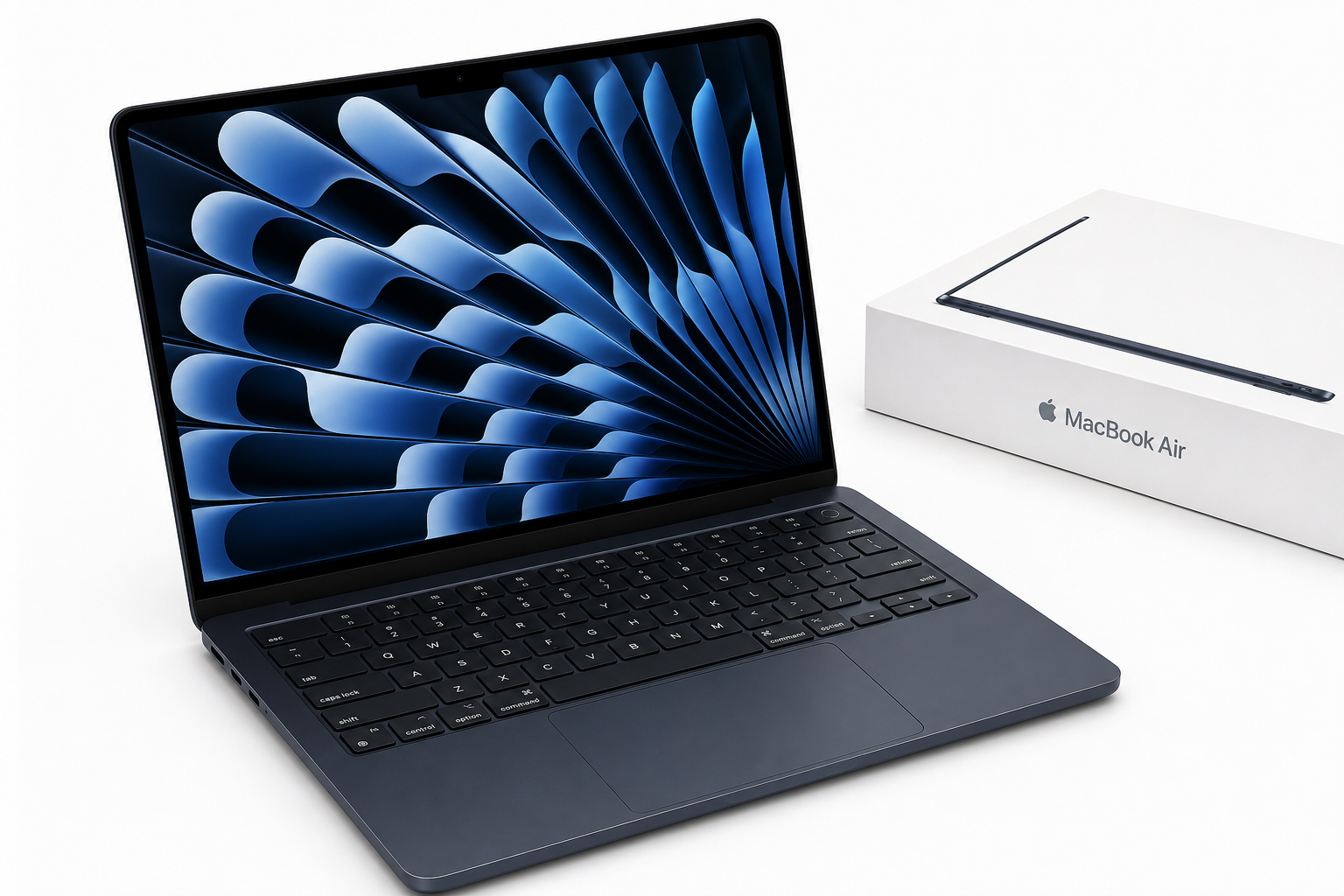
The Apple 2026 MacBook Air 13-inch Laptop with M5 chip in Midnight is a thin-and-light macOS notebook built around Apple’s next-generation M5 chip, with marketing that emphasizes being "built for AI." Paired with 16GB of unified memory and a 512GB SSD, it targets users who need more than entry-level performance but still prioritize portability and battery efficiency over workstation-class power.
Key highlights include a 13.6-inch Liquid Retina display, Wi‑Fi 7 for next-gen wireless performance, and a 12MP Center Stage camera that improves video calls. The familiar Touch ID-equipped keyboard deck rounds out a design focused on secure, everyday productivity.
This configuration is best suited for students, knowledge workers, and mobile creatives who want an AI-forward, future-ready MacBook Air that can comfortably handle productivity workloads, media consumption, and moderate creative or AI-enhanced tasks, while remaining exceptionally portable.
Detailed Analysis
Design and Build
The 2026 MacBook Air continues Apple’s minimalist, wedge-free design language with a flat, uniform profile and precisely milled aluminum chassis. The Midnight finish aims to give the laptop a modern, understated aesthetic. While darker finishes tend to show fingerprints more easily, Apple’s recent coatings have helped mitigate this compared to earlier generations.
Despite the performance-focused M5 chip and AI capabilities, this Air configuration appears to retain the hallmark traits of the line: lightweight, slim, and backpack-friendly, making it easy to carry between home, office, and campus.
Display: 13.6-inch Liquid Retina
The 13.6-inch Liquid Retina display is central to the experience. In typical Apple fashion, you can expect:
- High pixel density for crisp text and UI elements
- Wide color support suitable for photo viewing and light creative work
- Strong brightness and contrast for indoor and most outdoor scenarios
For everyday computing—web browsing, document editing, streaming video, coding, and light media editing—the display size offers a sweet spot between portability and usable screen real estate. Users who work heavily with side-by-side windows might still prefer a larger external display, but as an on-the-go panel, this size and resolution are well-aligned with the Air’s mobility goals.
M5 Chip and AI-Forward Positioning
Apple positions the M5 chip as "built for AI," which likely translates into a combination of:
- Enhanced performance cores and efficiency cores for everyday multitasking
- An improved integrated GPU for graphics and rendering
- A more capable Neural Engine or dedicated AI accelerators for on-device machine learning tasks
In practical terms, this should benefit:
- On-device AI features in macOS and supported apps (e.g., image enhancement, transcription, background noise suppression, smart selection tools)
- Creative workflows that leverage AI helpers for editing and generation
- Productivity apps that integrate predictive or assistive AI features
For most users, the value of an "AI-ready" chip is less about running large models locally and more about snappier, privacy-friendly on-device features that don’t require constant cloud connectivity.
Memory and Storage: 16GB Unified, 512GB SSD
This configuration pairs the M5 with 16GB of unified memory, which is a practical middle ground for 2026 workloads:
- More breathing room than base 8GB setups for multitasking
- Better suited to handling multiple browser tabs, office apps, communication tools, and a few heavier creative or development applications simultaneously
The 512GB SSD is similarly balanced:
- Adequate for a primary machine with productivity apps, a reasonable media library, and working files
- May still feel tight if you regularly handle large video projects or extensive local datasets, in which case external storage or cloud services become important companions
Because Apple’s unified memory and internal storage are not user-upgradeable, choosing 16GB/512GB upfront is a sensible configuration for buyers who want a system that remains comfortable for several years.
Connectivity: Wi‑Fi 7 and Beyond
Support for Wi‑Fi 7 is a standout spec for future-proofing. While not everyone will immediately benefit—since compatible routers and infrastructure are still rolling out—this ensures the laptop can take advantage of:
- Higher potential throughput for large file transfers and cloud workflows
- Lower latency, beneficial for video calls, remote development, and cloud-based AI tools
Alongside Wi‑Fi 7, you can expect modern Bluetooth support for peripherals. Port selection on recent MacBook Air models typically includes USB‑C/Thunderbolt ports and a headphone jack, which should continue to provide flexibility for docking, displays, and accessories.
Camera, Audio, and Input
The 12MP Center Stage camera is a meaningful upgrade over traditional 720p or 1080p laptop webcams:
- Higher resolution supports sharper video
- Center Stage uses AI-based framing to keep you in the middle of the shot as you move, useful for presentations and dynamic calls
Paired with Apple’s microphone array and speakers, the MacBook Air 2026 should deliver a strong overall communication experience for remote work and online classes.
The Touch ID sensor integrated into the power button adds quick biometric authentication. Combined with password managers and macOS keychain, it streamlines login and approvals without significantly compromising security.
Keyboard and trackpad quality have historically been strengths of recent MacBook Air generations, and this model is likely to maintain that standard—with a precise, large trackpad and a stable, comfortable keyboard suitable for extended typing sessions.
User Experience
Day-to-Day Performance
For typical workflows—office productivity, web browsing, email, note-taking, and collaboration tools—the M5-based MacBook Air should feel fast and responsive, even under heavy multitasking. The combination of an efficient chip, 16GB unified memory, and fast SSD storage helps keep the system snappy:
- Apps launch quickly
- System animations remain smooth
- Context-switching between applications is largely seamless
Users in fields like writing, marketing, coding, and data analysis (working with moderately sized datasets) are likely to find this configuration more than sufficient.
AI-Enhanced Workflows
As more macOS and third-party applications adopt AI features, the "built for AI" tagline becomes more meaningful. Potential benefits include:
- Faster photo and video enhancements in creative apps
- On-device transcription for meetings and lectures
- Smart selection, summarization, and assistance baked into office and note-taking tools
For students and professionals, this can translate into saved time and smoother workflows, especially in offline or low-connectivity environments where cloud-based AI tools are less reliable.
Mobility and Battery Expectations
True to the Air lineup, this 13-inch model emphasizes portability:
- Easy to carry in a backpack or messenger bag
- Suited for working in cafes, libraries, classrooms, and shared office spaces
While specific battery metrics aren’t listed in the provided information, Apple’s recent Apple Silicon laptops have established a reputation for long battery life under mixed workloads. Users should reasonably expect a full workday of light-to-moderate use away from the charger, particularly with the efficiency cores handling routine tasks.
Pros
- Next-generation M5 chip positioned for AI-accelerated tasks and future macOS features
- 16GB unified memory offers comfortable multitasking headroom beyond entry-level setups
- 512GB SSD provides a practical baseline for most users’ apps and files
- 13.6-inch Liquid Retina display balances portability with a spacious, high-quality viewing experience
- Wi‑Fi 7 support for future-proof, high-speed networking
- 12MP Center Stage camera enhances video call quality and framing
- Touch ID for quick, secure authentication
- Slim, lightweight design typical of the MacBook Air line, ideal for frequent travelers and students
Cons
- Memory and storage are not user-upgradeable, so configuration decisions at purchase are critical
- 13-inch form factor can feel cramped for heavy multitaskers without an external display
- Midnight color, while stylish, may show fingerprints more readily than lighter finishes
- AI benefits depend heavily on software ecosystem support and user workflows—some buyers may not fully leverage the "built for AI" capabilities
Value Assessment
The Apple 2026 MacBook Air 13-inch with the M5 chip, 16GB unified memory, and 512GB SSD occupies a mid-to-upper-tier position within the broader ultraportable laptop landscape. Instead of focusing on raw specs alone, its value proposition rests on several pillars:
- Longevity: The combination of the M5 chip, 16GB RAM, and Wi‑Fi 7 offers a configuration that should remain capable and compatible with evolving software requirements for years.
- AI Readiness: As on-device AI features mature, this model is better positioned than older Intel-based or early-generation Apple Silicon systems to handle them efficiently.
- Quality of Life: Display quality, camera performance, keyboard, trackpad, and battery behavior all contribute to a cohesive daily experience that goes beyond synthetic benchmarks.
For buyers who simply need a basic laptop for email and web browsing, this configuration may be more powerful than necessary. However, for those who expect to:
- Keep their machine for several years
- Use creative, coding, or AI-augmented workflows
- Rely on a single device for work, study, and personal computing
…the investment in this M5-powered MacBook Air configuration is easier to justify.
If pricing is a deciding factor, it’s worth comparing this model’s cost to alternative MacBook Air or Pro configurations, as well as premium Windows ultrabooks, using a macro such as {{PRICE_1}} in your internal documentation or pricing tools.
Final Thoughts
The Apple 2026 MacBook Air 13-inch Laptop with M5 chip is a thoughtfully balanced ultraportable that leans into the next wave of on-device AI while preserving the hallmarks of the MacBook Air line: portability, battery efficiency, and a polished user experience.
- If you prioritize long-term relevance, AI-forward features, and a cohesive macOS ecosystem, this configuration delivers a strong blend of performance and mobility.
- If your needs are modest and unlikely to grow, or if you require a larger display and more ports, you may want to evaluate other models in Apple’s lineup or competing ultrabooks.
Overall, for students, professionals, and creatives who want a compact, capable, and future-oriented MacBook that can comfortably handle both traditional productivity tasks and emerging AI-enhanced workflows, this 2026 M5-powered MacBook Air in Midnight stands out as a compelling choice.