
Apple 2026 MacBook Neo 13‑inch (A18 Pro) Review: A Compact Laptop Built for AI‑Driven Workflows
The [Apple 2026 MacBook Neo 13-inch Laptop with A18 Pro chip: Built for AI and Apple Intelligence, Liquid Retina Display, 8GB Unified Memory, 256GB SSD Storage, 1080p FaceTime HD Camera; Indigo](https://www.amazon.com/dp/B0GR6FHGXX) is a compact Apple notebook designed around on‑device AI and Apple Intelligence workflows. Its A18 Pro chip prioritizes machine learning performance while maintaining the familiar MacBook blend of battery efficiency, premium build, and a color-accurate 13-inch Liquid Retina display. With 8GB of unified memory and a 256GB SSD, it targets everyday productivity, light creative work, and AI-assisted tasks more than heavy professional workloads. This review examines the core hardware, real-world usage experience, strengths, and trade-offs to help you decide if the MacBook Neo 13-inch in Indigo fits your computing needs.
Overview
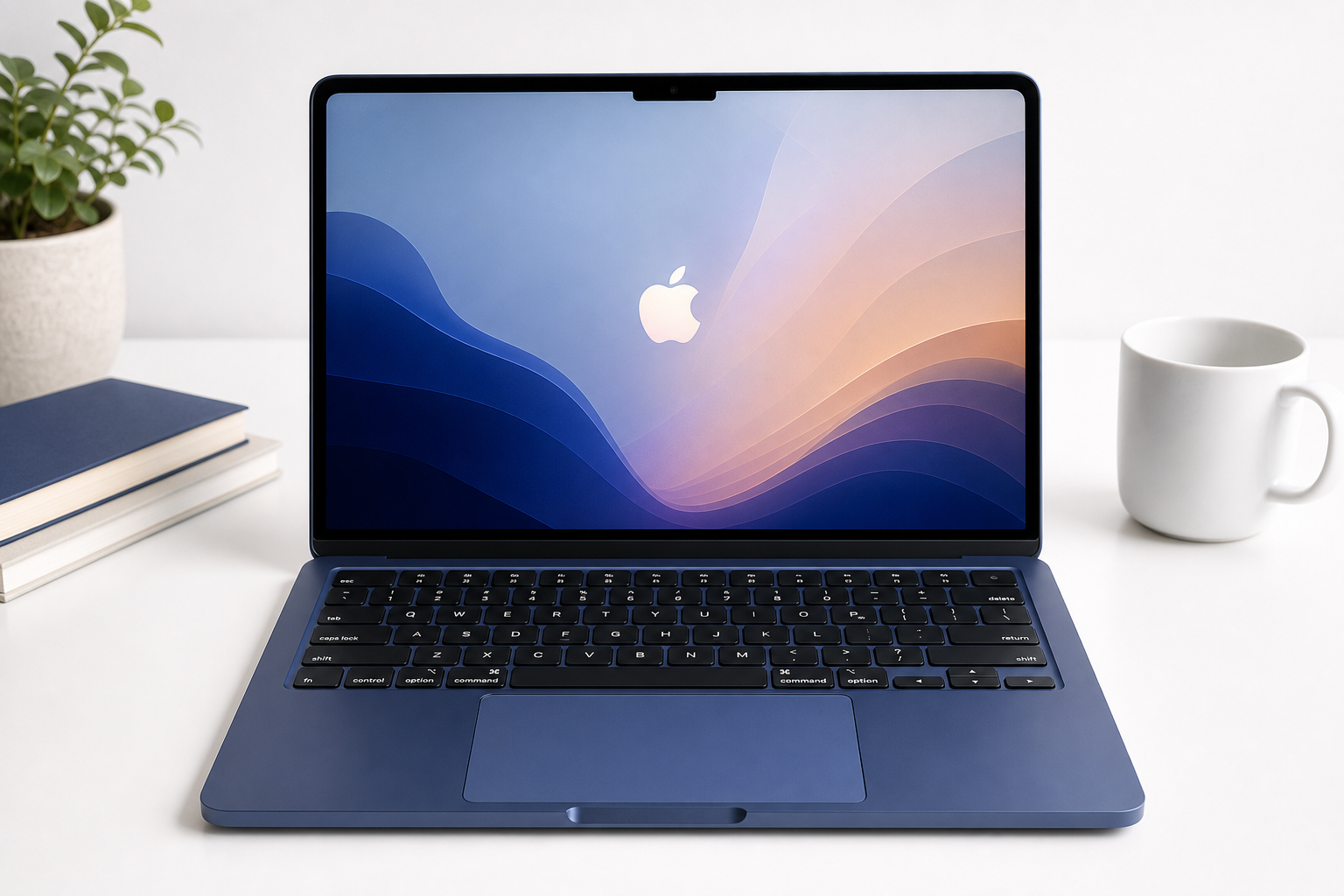
The Apple 2026 MacBook Neo 13-inch Laptop with A18 Pro chip: Built for AI and Apple Intelligence, Liquid Retina Display, 8GB Unified Memory, 256GB SSD Storage, 1080p FaceTime HD Camera; Indigo is Apple’s 13‑inch notebook positioned for users who want a highly portable system optimized for on-device AI and Apple Intelligence features.
Powered by the A18 Pro chip, this model emphasizes neural processing and machine learning acceleration, pairing it with a 13-inch Liquid Retina display, 8GB of unified memory, and 256GB of SSD storage. The Indigo finish adds a distinctive look while keeping the familiar slim and lightweight MacBook construction.
This review focuses on how the MacBook Neo 13-inch performs in everyday productivity, creative workloads, and AI-assisted tasks, and who will benefit most from this configuration.
Key Highlights
- A18 Pro chip built for AI and Apple Intelligence – Hardware-accelerated neural processing for on-device AI workflows and system-wide Apple Intelligence features.
- 13-inch Liquid Retina display – High pixel density and wide color support suited for media consumption and light content creation.
- 8GB unified memory – Shared memory architecture for CPU, GPU, and Neural Engine, tuned to mainstream workloads.
- 256GB SSD storage – Fast solid-state storage for the OS, applications, and a moderate amount of user data.
- 1080p FaceTime HD Camera – Higher-resolution webcam for modern video calls, enhanced by Apple’s image processing.
- Indigo finish – A distinct color option for users who want a less conventional MacBook aesthetic.
- Compact and lightweight – 13-inch footprint and low weight (around 2.7 lb) geared toward portability.
Core Features
A18 Pro Chip and AI Acceleration
At the center of the MacBook Neo 13-inch is the A18 Pro chip. This system-on-a-chip design integrates CPU, GPU, and a high-performance Neural Engine into a single package.
Key aspects include:
- Multi-core CPU for responsive general computing, multitasking, and background tasks.
- Integrated GPU capable of handling UI animations, light 3D work, and hardware-accelerated media playback.
- Neural Engine tailored for on-device AI and Apple Intelligence, enabling tasks such as advanced text processing, intelligent image enhancements, and context-aware system features with low latency.
The emphasis on AI means that workflows involving generative tools, smart search, and media analysis can feel more immediate and responsive, with less reliance on cloud processing.
Liquid Retina Display
The 13-inch Liquid Retina display is designed for clarity and color accuracy in a portable form factor. Typical characteristics of Apple’s Liquid Retina panels include:
- High pixel density for sharp text and crisp UI elements.
- Wide color gamut, suitable for casual photo and video editing.
- Support for advanced display technologies like True Tone and system-wide color management.
This makes the screen well-suited for web browsing, office work, streaming content, and light creative use such as editing social media photos or short video clips.
Unified Memory: 8GB
The MacBook Neo configuration in focus comes with 8GB of unified memory. In Apple’s architecture, memory is shared across CPU, GPU, and Neural Engine, which can minimize overhead and speed up data transfer between components.
In practice, 8GB unified memory is aimed at:
- Web browsing with multiple tabs.
- Office and productivity applications.
- Communication tools and collaboration platforms.
- Moderate multitasking across mainstream apps.
For intensive professional workloads—such as large-scale video editing or massive codebases—users may find this capacity limiting over time, especially when running many memory-hungry applications simultaneously.
Storage: 256GB SSD
The base storage option is a 256GB SSD. As with other modern Apple notebooks, this drive is optimized for fast boot times and quick application launches.
This capacity tends to suit:
- Users who primarily work with documents, spreadsheets, and presentations.
- Cloud-centric workflows that store large media libraries online.
- Lighter local media collections.
Users with extensive photo or video libraries, large games, or multiple virtual machines may want to pair the MacBook Neo with external storage or cloud services.
1080p FaceTime HD Camera
The 1080p FaceTime HD Camera is a notable improvement over legacy 720p webcams commonly found in older laptops. Combined with Apple’s image processing, it supports:
- Sharper video in conferencing apps.
- Better exposure and white balance control in varied lighting.
- Clearer detail for remote classes, meetings, and presentations.
This aligns the MacBook Neo 13-inch with the expectations of hybrid work and remote learning environments.
Design and Indigo Finish
The MacBook Neo 13-inch retains a slim, minimalist aluminum chassis, while the Indigo finish offers a more personal aesthetic. This design approach emphasizes:
- A compact footprint with thin bezels around the 13-inch display.
- A precision trackpad and backlit keyboard tuned for extended typing sessions.
- Modern port layout typical of current Mac notebooks (e.g., USB-C/Thunderbolt for data, display, and charging), favoring adapters or hubs for legacy peripherals.
Usage Experience
Everyday Productivity
For daily computing—web browsing, email, office documents, messaging, and video conferencing—the A18 Pro chip and 8GB unified memory provide a responsive experience. Applications open quickly, system animations remain fluid, and switching between common productivity tools is generally smooth.
The 13-inch display offers enough screen real estate for side-by-side windows, especially when combined with macOS window management features. The lightweight design makes the laptop easy to carry between rooms, campuses, offices, and travel destinations.
AI and Apple Intelligence Workflows
The MacBook Neo 13-inch is marketed as “Built for AI and Apple Intelligence,” reflecting the role of the A18 Pro’s Neural Engine.
In real use, this can translate to:
- Faster on-device transcription and text summarization.
- Intelligent suggestions in productivity and creative apps.
- Background analysis of photos and documents for search and organization.
Because many of these tasks run locally, users can benefit from lower latency and improved privacy compared to cloud-only AI experiences.
Creative and Media Use
For creative users, the Liquid Retina display and integrated GPU are well-suited for:
- Photo editing at a casual or enthusiast level.
- Short-form video editing for social platforms.
- Music production with a moderate number of tracks and plug-ins.
The limiting factor is more likely to be memory and storage than raw compute for light projects. Larger media libraries and complex timelines may push the 8GB/256GB configuration, especially when multitasking with other heavy applications.
Mobility and Thermals
The 13-inch form factor and low weight support a highly mobile lifestyle. The integrated design of the A18 Pro chip is built for efficiency, which typically results in:
- Quiet operation with minimal fan noise under average loads (or potentially fanless, depending on final design specifics).
- Comfortable surface temperatures during extended productivity sessions.
These characteristics make the MacBook Neo 13-inch a strong candidate for use in libraries, classrooms, coworking spaces, and other quiet environments.
Strengths
- Optimized for AI and Apple Intelligence thanks to the A18 Pro chip and advanced Neural Engine.
- High-quality 13-inch Liquid Retina display with sharp visuals suitable for productivity and media.
- Compact and lightweight design that favors portability without sacrificing build quality.
- 1080p FaceTime HD Camera for modern video conferencing expectations.
- Unified memory architecture that can make 8GB feel more efficient than traditional discrete RAM in some workflows.
- Distinctive Indigo finish for users who want a more expressive MacBook.
Weaknesses
- 8GB unified memory may be limiting for professional users running heavy creative suites, large development environments, or extensive multitasking.
- 256GB SSD can feel constrained for users with large local media, game libraries, or offline project archives.
- Likely limited port selection focused on USB-C/Thunderbolt, which may require adapters or docks for legacy peripherals.
- The 13-inch screen size, while portable, may feel tight for users who work with dense interfaces or large spreadsheets unless paired with an external display.
Suitable Scenarios
The Apple 2026 MacBook Neo 13-inch with A18 Pro chip is particularly well-suited for:
-
Students and learners
- Research, writing papers, presentation creation, and video lectures.
- AI-assisted note-taking, summarization, and language tools.
- Portability for moving between classes and home.
-
General productivity and office users
- Email, web-based dashboards, document editing, and collaboration tools.
- Regular video meetings where the 1080p camera and reliable performance matter.
-
Mobile professionals
- Consultants, freelancers, and remote workers who prioritize a portable, dependable machine with strong battery efficiency.
- On-the-go AI workflows such as document analysis and quick creative iterations.
-
Light creatives and content creators
- Photo and light video editing for social media, blogs, and small projects.
- Content planning, scripting, and drafting supported by AI tools.
Users focused on large-scale video production, 3D rendering, or heavy software development may want a configuration with more memory and storage, or a different model optimized for those workloads.
Final Evaluation
The Apple 2026 MacBook Neo 13-inch Laptop with A18 Pro chip in Indigo positions itself as a compact, AI-forward notebook designed for everyday productivity, education, and light creative work. Its standout attributes are the A18 Pro’s AI acceleration, the 13-inch Liquid Retina display, and the modern 1080p webcam, all wrapped in a portable and visually distinctive chassis.
The main trade-offs are its 8GB unified memory and 256GB SSD, which are acceptable for mainstream users but may be restrictive for intensive professional workloads or large offline libraries.
If your priorities include portability, strong integration with Apple Intelligence and on-device AI features, a quality display, and modern video-call capabilities—and your workflows are mostly in the light-to-moderate range—the Apple 2026 MacBook Neo 13-inch Laptop with A18 Pro chip: Built for AI and Apple Intelligence, Liquid Retina Display, 8GB Unified Memory, 256GB SSD Storage, 1080p FaceTime HD Camera; Indigo is a compelling option to consider.